
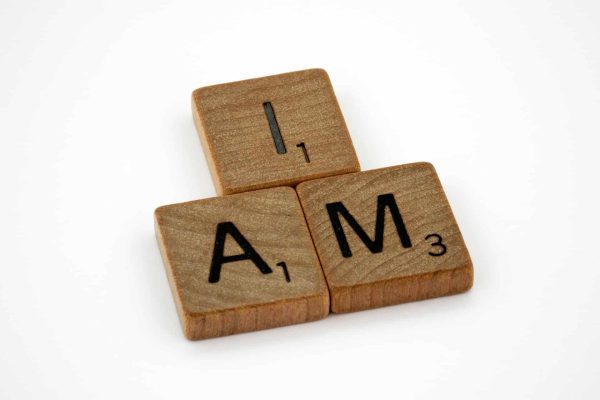
William Shakespeare’s character, Hamlet, speaks the words, “To be, or not to be.” While he is pondering the ideas of life versus death, the question of being is one that has plagued mankind since the inception of philosophical thought. How did we come into being? Is there a higher power who put us into being? How did that power come into being? These questions are valid and consequential for the salvation of mankind. People of the atheist movement have concluded that there is not a god above who is the creator of the universe, but is that logic sound?
Science is not capable of comprehending God. He cannot be sensed with any of the five senses. He cannot be measured or traced in any way. His presence in the physical world is imperceptible by man, directly, so therefore He cannot exist. Scientifically, this is truth. Also, science cannot comprehend how a swallow knows when or where to migrate. Does that mean that it is just chance that the animals know where and when to go at the same time every other season? Just because science cannot explain a thing does not mean that a thing does not exist.
Science tells us to trust our senses. The Bible is in alignment with that. Those who do not know God, “what can be known about God is plain to them, because God has shown it to them. For His invisible attributes, namely, his eternal power and divine nature, have been clearly perceived, ever since the creation of the world, in the things which have been made” (Romans 1:19-20). The Greek philosopher Parmenides, in his poem literary scholars have titled On Nature (translated by John Burnet in 1892), wrote around the turn of the 5th century BC about the concept of existence:
Come now, I will tell thee — and do thou harken to my
saying and carry it away — the only two ways of search that
can be thought of. The first, namely, that It is, and that it is
impossible for anything not to be, is the way of. Conviction
for truth is its companion. The other, namely, that It is not,
and that something must needs not be — that, I tell thee, is a
wholly untrustworthy path. For you cannot know what is
not — that is impossible — nor utter it;
For it is the same thing that can be thought and that can be.
Parmenides explains, in Ancient Greek hexameter verse, that he can clearly see that nothing comes from nothing and therefore cannot exist where the concept of “existing” means “being.” By scientific logic, nothing cannot produce anything but nothing, and the opposite of nothing, by nature, is being. Therefore, to exist means that we must have come from being. Existence is only produced from that which exists. Therefore, something has always existed. There is something in the universe which must be eternal, having always existed, never having come into existence, and having created all other existence from it.
In Exodus 3:14, God told Moses, “I AM who I AM.” God describes Himself by His defining nature: “I AM.” God is that which has always existed. By Him, we are made and exist. Because of the reasoning He has given to us, we can perceive Him. It is only through our own hard-heartedness and hard-headedness that we do not heed the words of Psalm 46:10: “Be still and know that I am God.”
Lance Byers