
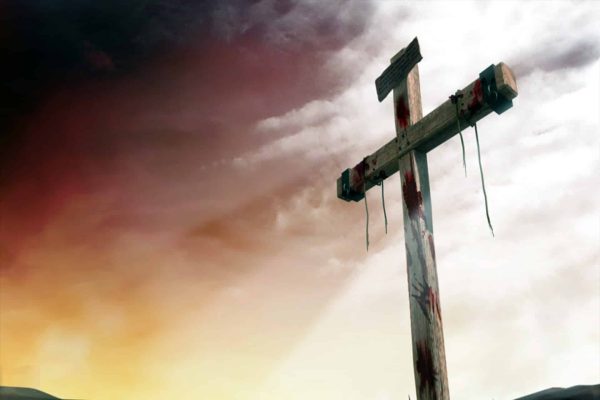
The Old Law was complex. While it was not impossible in itself, its complexity — combined with human weakness and the constant pull of temptation — made perfect obedience exceedingly difficult. Even the most devout could find themselves transgressing at some point, perhaps by stretching the boundaries of the Law to satisfy a want, need, or desire in a moment of weakness.
That same tendency persists today. People still seek to justify their desires through selective or self-serving interpretations of Scripture. Many appeal to permissive elements within the Old Testament, even though Jesus Himself explained that certain allowances — such as those concerning divorce — were given “because of your hardness of heart” (Matthew 19:8; Mark 10:5). His words expose a limitation within the Old Law and point us toward the need for the New Covenant foretold in Jeremiah 31:31. As Hebrews 8:7 affirms, the first covenant was not without fault.
In discussing this subject, Christians often turn to Colossians 2:13-14, particularly the phrase “nailing it to the cross,” to describe the end of the Old Law. Some, however, argue that this interpretation reads too much into the text. To evaluate that claim, we must first understand the passage itself: “And you, who were dead in your trespasses and the uncircumcision of your flesh, God made alive together with Him, having forgiven us all our trespasses, by canceling the record of debt that stood against us with its legal demands. This He set aside, nailing it to the cross.”
Paul is writing to Christians in Colossae, many of whom were Gentiles — described here as “uncircumcised” and formerly idolatrous. They were spiritually dead in their sins, burdened by a “record of debt” with binding legal demands. Through Christ, that debt was canceled. God set it aside, nailing it to the cross in the sense that its penalty was fully addressed through Christ’s sacrifice.
At first glance, the Old Law is not explicitly mentioned in this passage. Yet the broader teaching of Scripture shows that the conclusion often drawn is not misplaced. For those under the Old Law, it functioned as a system that held them accountable — like a tutor or schoolmaster. As Paul explains: “But after faith has come, we are no longer under a tutor. For you are all sons of God through faith in Christ Jesus. For as many of you as were baptized into Christ have put on Christ” (Galatians 3:25-27).
Just as children are governed by stricter rules for their development, so the Law served a temporary, preparatory role. It disciplined and instructed, but it was never the final state.
The “record of debt” becomes especially vivid when viewed at the cross. There, humanity’s sin — both under the Law and apart from it — reaches its fullest expression. For the Jews, the Law defined sin and made its weight unmistakable, yet it could not ultimately remove that burden. For Gentiles, sin existed apart from the Law but still incurred guilt before God. In both cases, the debt accumulated beyond what any person could repay.
Christ, sinless and divine, offered Himself as the only sufficient payment. In His death, that overwhelming debt was satisfied. As Paul writes, “But now we are released from the law, having died to that which held us captive, so that we serve in the new way of the Spirit and not in the old way of the written code” (Romans 7:6).
By settling that debt, Christ rendered the Old Covenant obsolete and established a new one through His blood: “In speaking of a new covenant, He makes the first obsolete” (Hebrews 8:13). Jesus Himself declared, “This cup…is the new covenant in My blood” (Luke 22:20; cp. 1 Corinthians 11:25). Paul further explains that this new covenant is not of the letter, but of the Spirit — “for the letter kills, but the Spirit gives life” (2 Corinthians 3:5-6).
Though Paul addresses Gentiles in Colossians, his language extends beyond them. When he says “having forgiven us all our trespasses,” the scope is universal. There is no longer a division between Jew and Gentile. As he writes elsewhere: “For He Himself is our peace…who has broken down in His flesh the dividing wall of hostility…by abolishing the law of commandments expressed in ordinances…that He might reconcile us both to God in one body through the cross” (Ephesians 2:14-16).
Thus, the record of debt for all humanity has been exposed and decisively dealt with at the cross. For the Gentile, that debt arose from sin apart from the Law; for the Jew, it was defined and intensified by the Law itself. In both cases, the same solution is given: forgiveness through Christ.
What was nailed to the cross is, therefore, the full weight of that debt — its penalty satisfied, its claim removed. In that act, the Old Law reached its fulfillment and passed away, replaced by the new covenant established in Christ. What a profound and gracious gift: a debt we could never repay, satisfied by another.
Lance Byers