
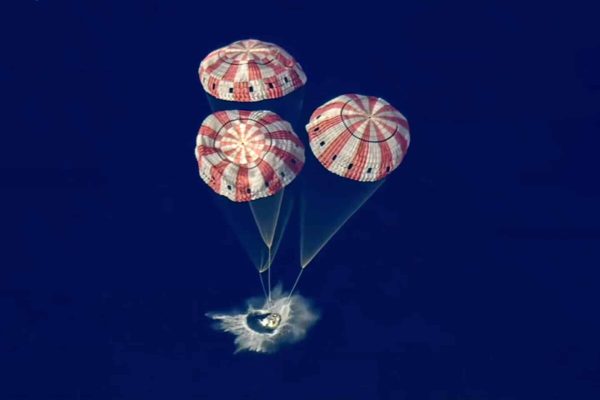
On Friday, April 10 at 7:07:27 (Central Time), the Artemis II space mission splashed back down to Earth. The astronauts had just completed a 9-day, 1 hour, 32-minute, and 15-second trip around the moon and the world was watching, holding our breath as the command module Orion hit the atmosphere of Earth. Images of Columbia and Challenger flashed through the minds of those who remember, and children watched with a first-time excitement and wonder as NASA switched to a visualization of the flames deflecting around the heat shield around the Orion module as they began to plunged into the atmosphere. The NASA Public Affairs Officer and Missions Commentator, Rob Navias, spoke poetically as the crew began reentry saying that they could now feel “the first tug of gravity” as they approached.
Gravity is a force of nature which cannot be escaped on this planet. It is ever present, constant, and often forgotten about. We just assume it is always there, and we never question it. Only when astronauts are in space is there any real thought about gravity as we watch them floating in their spaceship. It is a novelty as we watch them play catch with themselves with slowly-thrown baseballs and watch them slurp up bubbles of water floating in front of their faces. The fascination of it makes us all yearn to experience it. Children imitate it and dress up in pretend space suits. Adults wonder what could have been had they chosen a different path in life.
What most do not think about is the effects of being away from gravity have on the body. We never think about how much we rely on gravity just to survive. Without gravity, the muscles have nothing to do other than the most simple and easy tasks. There is no resistance, so they atrophy. Our heart is used to having to pump with enough power to push blood from the tip of your toes back up, and to push it all the way to the top of your head, so fluid in your body shifts to the upper body and face, the heart changes shape and weakens, and that feeling of blood rushing to your head when you are upside down is a constant problem. All your balance sensors are built in such a way, so they know which way is up, but without gravity, no ways and all ways are up, so they are confused causing motion sickness and vertigo. It even changes your eyesight. When astronauts come back home, a doctor is the first person they see. The Navy doctors climbed into the capsule with the astronauts to be sure they are ok before helping them on to the raft in the Pacific Ocean.
God’s love is similar to gravity. It is ever present, constant, and often forgotten about or taken advantage of. Sin tempts us with novelty. As we look and see the joys of sin, our carnal eye, flesh, and pride suddenly start wishing for the things which are only obtained by resisting God’s love and rejecting His grace. John, in I John 2:15-17, tells us to avoid these things, no matter how tempting or what joy they may seem to bring: “Do not love the world or the things in the world. If anyone loves the world, the love of the Father is not in him. For all that is in the world—the desires of the flesh and the desires of the eyes and pride of life—is not from the Father but is from the world. And the world is passing away along with its desires, but whoever does the will of God abides forever.”
It is not to be misunderstood that I am saying going to space is a sin. It is not. It is incredible scientific adventure and discovery as we continue to explore and understand the gift of this existence God has given us. Sin is not so productive. It is novelty. Just as the human body has problems as it escapes the gravity of Earth, our soul deteriorates the further away we stray from God. We are designed to bask in the love of God. Without Him, we may enjoy the novelty of freedom for obedience to Him, but the damage it does to our soul can prove fatal.
Just as astronauts return to Earth in order to rest, heal, and return to normal, we must do the same. Repentance and becoming obedient to God will restore our soul. That “first tug of gravity” might feel extremely uncomfortable, and even unfamiliar after time in space. In some ways, returning into the well of gravity at sea level when they splash down might be painful or difficult. Sometimes it takes time to reacclimatize to what is best for us, but in the end, it is what offers us life as we are designed to live it, and in the case of God’s love, an eternal life as God desires and which we are destined if we desire Him.
Lance Byers